the ultimate hitchhiker’s guide to the galaxy
The Ultimate Hitchhiker’s Guide to the Galaxy: A Comprehensive Overview
Douglas Adams’ creation, The Hitchhiker’s Guide to the Galaxy, began as a radio comedy and blossomed into a multi-media phenomenon, captivating audiences with its unique blend of science fiction and British wit.
The story follows Arthur Dent, an ordinary Englishman, thrust into a cosmic adventure after Earth’s demolition, guided by the titular Guide and his eccentric companions.
This comprehensive overview explores the origins, adaptations, key characters, and enduring themes that have made this series a beloved classic for generations of fans worldwide.
From its humble beginnings on BBC Radio to its expansion into books, television, and film, the Guide continues to inspire and entertain with its satirical take on life, the universe, and everything.
The saga mocks modern society with humour and cynicism, featuring a hapless hero who unexpectedly finds himself amidst galactic chaos and bureaucratic nightmares.
It’s a journey filled with absurdity, existential questions, and the unwavering importance of always knowing where your towel is.
The series’ enduring appeal lies in its ability to blend philosophical pondering with laugh-out-loud comedy, making it a truly unique and unforgettable experience.
The Guide itself is a testament to Adams’ genius, offering a quirky and insightful perspective on the vastness and strangeness of the cosmos.
Prepare to embark on a hilarious and thought-provoking adventure through space and time, guided by the wisdom (and occasional inaccuracies) of The Hitchhiker’s Guide to the Galaxy.
This exploration delves into the heart of what makes this series so special, examining its cultural impact and lasting legacy in the realm of science fiction and comedy.
The story’s episodic nature and surreal plot contribute to its charm, allowing for endless possibilities and unexpected twists at every turn.
It’s a world where Vogons recite terrible poetry, robots suffer from existential dread, and the answer to life, the universe, and everything is simply 42.
The series’ success is a testament to Adams’ ability to tap into universal themes of alienation, absurdity, and the search for meaning in a chaotic world.
The Hitchhiker’s Guide to the Galaxy remains a timeless classic, continuing to resonate with readers and viewers of all ages.
It’s a story that encourages us to embrace the absurd, question everything, and always remember to bring a towel.
The series’ influence can be seen in countless works of science fiction and comedy, solidifying its place as a cultural touchstone.
From its iconic characters to its unforgettable quotes, the Guide has left an indelible mark on popular culture.
This overview aims to provide a comprehensive understanding of the series, exploring its various facets and celebrating its enduring appeal.
It’s a journey into a world where anything is possible, and the only limit is your imagination.
The Hitchhiker’s Guide to the Galaxy is more than just a story; it’s a state of mind.
It’s a reminder to not take life too seriously, to embrace the unexpected, and to always be prepared for the end of the world.
The series’ satirical commentary on bureaucracy, technology, and human nature remains as relevant today as it was when it first appeared.
It’s a timeless tale that continues to inspire, entertain, and provoke thought.
The Hitchhiker’s Guide to the Galaxy is a masterpiece of science fiction and comedy, and its legacy will undoubtedly endure for generations to come.
The series’ enduring popularity is a testament to Adams’ genius and his ability to create a world that is both hilarious and profound.
It’s a story that reminds us that even in the face of cosmic indifference, there is always room for laughter and hope.
The Hitchhiker’s Guide to the Galaxy is a journey worth taking, and one that will leave you questioning everything you thought you knew.
So grab your towel, and prepare for an adventure unlike any other.
The series’ impact on popular culture is undeniable, and its influence can be seen in countless works of art and entertainment.
Origins and Initial Broadcast
The Hitchhiker’s Guide to the Galaxy initially emerged as a six-part radio comedy series on BBC Radio 4, debuting on March 8, 1978. Douglas Adams, the visionary creator, meticulously crafted the narrative, drawing inspiration from his own experiences and a fascination with science fiction.
The genesis of the idea reportedly stemmed from a feeling of frustration with the mundane and a desire to create something truly original and absurd. The initial broadcast featured a stellar cast, including Peter Jones as the narrator, lending a distinctive voice to the all-knowing Guide.
The series’ unexpected success led to repeat broadcasts and a devoted following, quickly establishing it as a cult phenomenon. The radio format allowed Adams to fully explore the story’s quirky humor and imaginative world-building.
The show’s unique blend of science fiction, satire, and British wit resonated with audiences, setting the stage for its expansion into other media. The initial reception was overwhelmingly positive, praising its originality and comedic timing.
This humble beginning on BBC Radio 4 laid the foundation for a sprawling multimedia franchise that continues to captivate audiences today.
The radio series’ success proved that there was a significant appetite for intelligent, humorous science fiction.
The Radio Series: A Humble Beginning
The Hitchhiker’s Guide to the Galaxy radio series, broadcast by the BBC, was characterized by its innovative sound design and improvisational spirit. Douglas Adams embraced the limitations of the medium, relying heavily on sound effects and voice acting to create a vivid and immersive experience.
The production was notably low-budget, forcing the team to be resourceful and creative in bringing Adams’ fantastical vision to life. Despite these constraints, the series achieved a remarkably polished and professional sound.
The cast, led by Peter Jones as the Guide’s narrator, developed a strong rapport, contributing to the show’s natural and comedic timing. Improvisation played a key role, allowing the actors to add their own unique touches to the characters and dialogue.
The series’ episodic structure allowed for a gradual unfolding of the story, building suspense and intrigue with each installment. The radio format also encouraged listeners to use their imaginations, filling in the gaps with their own mental imagery.
This humble beginning proved to be a fertile ground for the series’ enduring success, establishing its distinctive tone and style.
The radio series remains a beloved classic, cherished for its originality and comedic brilliance.
The Books: Expanding the Universe
Douglas Adams transitioned The Hitchhiker’s Guide to the Galaxy from radio to a series of five novels, beginning with the eponymous book in 1979. These books dramatically expanded upon the original radio series’ concepts, characters, and storylines.
The novels allowed Adams to delve deeper into the philosophical and satirical themes that underpinned the series, exploring ideas about bureaucracy, technology, and the meaning of life with greater nuance.
He introduced new planets, creatures, and subplots, enriching the universe and providing a more comprehensive and detailed world for readers to explore. The books also offered a more character-driven narrative, allowing readers to connect with Arthur Dent and his companions on a deeper level.
Adams’ writing style, characterized by its wit, intelligence, and playful use of language, became a hallmark of the series. The books’ success cemented The Hitchhiker’s Guide to the Galaxy as a literary phenomenon.
The novels provided a lasting legacy, solidifying the series’ place in science fiction and comedic literature.
They remain widely read and enjoyed today, continuing to inspire and entertain generations of fans.
Adaptations: From Radio to Screen and Beyond
The Hitchhiker’s Guide to the Galaxy has seen numerous adaptations beyond its initial radio broadcast, demonstrating its enduring popularity and adaptability. A television series aired in 1981, faithfully recreating the radio show’s humor and charm, though constrained by the technology of the time.
In 2005, a feature film brought the story to a wider audience, starring Martin Freeman as Arthur Dent. While the film received mixed reviews, it introduced the series to a new generation of fans.
Further adaptations include a 1992 interactive fiction game and various stage productions, each offering a unique interpretation of Adams’ work. There have also been comic book adaptations, expanding the universe visually.
More recently, a new radio series and an Amazon Prime Video adaptation have been announced, signaling a renewed interest in the franchise. These adaptations showcase the series’ versatility and its ability to resonate with audiences across different mediums.
Each version contributes to the ongoing legacy of Douglas Adams’ masterpiece.
Key Characters
Adams’ universe is populated with unforgettable characters, from the hapless Arthur Dent to the two-headed Zaphod Beeblebrox, each contributing to the series’ unique charm and comedic brilliance.
Arthur Dent: The Reluctant Hero
Arthur Dent, a quintessential Englishman, embodies the everyman thrust into extraordinary circumstances; his ordinary life is shattered when Earth is demolished to make way for a hyperspace bypass.
Initially bewildered and resistant to the chaos unfolding around him, Arthur serves as the audience’s entry point into the bizarre and often illogical universe of The Hitchhiker’s Guide to the Galaxy.
He’s characterized by his perpetual state of confusion, his fondness for tea, and his unwavering attachment to his dressing gown – symbols of his grounded, domestic existence.

Throughout his intergalactic travels, Arthur grapples with existential questions and the absurdity of the universe, often relying on his wit and resilience to navigate the challenges he faces.
Despite his reluctance, Arthur’s journey transforms him from an ordinary man into a reluctant hero, forced to confront the vastness and strangeness of existence.
His interactions with the eccentric characters he encounters highlight the series’ satirical commentary on human nature and the search for meaning in a chaotic world.
Martin Freeman’s portrayal in the 2005 television adaptation perfectly captured Arthur’s bewildered charm and relatable humanity, solidifying his status as a beloved character.
Ford Prefect: The Researcher
Ford Prefect, seemingly an out-of-work actor, is revealed to be a field researcher for the titular Hitchhiker’s Guide to the Galaxy, hailing from a small planet in the vicinity of Betelgeuse.
His primary function is to experience and document the cultures and phenomena of the galaxy, contributing to the Guide’s vast and often unreliable database of information.
Ford’s knowledge of the galaxy proves invaluable to Arthur Dent, rescuing him moments before Earth’s destruction and initiating their improbable journey through space.
He possesses a pragmatic and resourceful nature, often employing unconventional methods to navigate the complexities of intergalactic travel and bureaucracy.
Ford’s detached and observational perspective provides a humorous contrast to Arthur’s emotional reactions to the unfolding events, highlighting the absurdity of their situation.
He’s a master of hitchhiking, utilizing his thumb and a network of contacts to traverse the galaxy with relative ease.
Despite his seemingly carefree attitude, Ford is dedicated to his work and committed to providing accurate (or at least entertaining) information to the Guide’s readers.
Zaphod Beeblebrox: The Two-Headed President
Zaphod Beeblebrox, the two-headed, three-armed former Galactic President, embodies chaotic energy and self-promotion throughout the Hitchhiker’s Guide to the Galaxy series.
He stole the Heart of Gold, a spaceship powered by the Infinite Improbability Drive, primarily for the thrill of the adventure and to escape the responsibilities of leadership.
Zaphod’s motivations are often unclear, driven by a desire for attention, excitement, and a general disregard for conventional rules and societal norms.
His second head frequently offers cynical commentary and attempts to steer him towards more rational decisions, though often unsuccessfully.
Despite his eccentric behavior, Zaphod possesses a surprising degree of cunning and resourcefulness, navigating dangerous situations with a blend of luck and audacity.
He’s a cultural icon, known for his flamboyant style and rebellious spirit, attracting both admirers and detractors across the galaxy.
Zaphod’s actions, while often impulsive and self-serving, inadvertently contribute to the unfolding narrative and the search for the Ultimate Question.
Marvin the Paranoid Android: Existential Dread in Robot Form
Marvin, the Paranoid Android, is arguably the most memorable character in The Hitchhiker’s Guide to the Galaxy, renowned for his chronic depression and overwhelming intellect.
Possessing a brain the size of a planet, Marvin is tasked with performing menial duties aboard the Heart of Gold, a situation he finds profoundly depressing and beneath his capabilities.
His speech is characterized by slow, mournful tones and a constant stream of pessimistic observations about the futility of existence.
Marvin’s advanced intelligence allows him to accurately predict negative outcomes, further fueling his despair and reinforcing his bleak worldview.
Despite his negativity, Marvin displays a dry wit and a sardonic sense of humor, often delivering cutting remarks with a deadpan expression.
He serves as a comedic foil to the other characters, highlighting the absurdity of the universe through his unwavering pessimism.
Marvin’s existential angst resonates with audiences, making him a relatable and surprisingly sympathetic character despite his robotic nature.

Core Concepts & Themes
Adams’ work brilliantly explores themes of absurdity, bureaucracy, and the search for meaning, all delivered with uniquely British humour and cynical wit.
The series questions societal norms and challenges conventional wisdom, prompting reflection on life, the universe, and everything.
The Importance of a Towel
Within the sprawling cosmos of The Hitchhiker’s Guide to the Galaxy, the humble towel transcends its mundane purpose, becoming a symbol of preparedness, resourcefulness, and ultimately, survival.
Arthur Dent learns early on that a towel is “about the most massively useful thing an interstellar hitchhiker can have,” a sentiment echoed throughout the series.
It can be used for warmth, shelter, weapon, signaling, and even as a rudimentary sail – its versatility is practically limitless.
More than just a practical item, the towel represents a certain mindset: a willingness to adapt, to be prepared for the unexpected, and to embrace the inherent chaos of the universe.
The Guide itself emphasizes its importance, highlighting its multifaceted utility in countless scenarios.
It’s a running gag, a constant reminder of the series’ absurdist humour, and a subtle commentary on the importance of practicality in a world gone mad.
The towel embodies the spirit of hitchhiking itself – being ready to seize opportunities and navigate the unknown with a touch of ingenuity.
Ultimately, the towel is a testament to Adams’ genius, transforming an everyday object into an iconic symbol of the series’ enduring appeal.
It is a reminder that even in the face of galactic upheaval, a little preparedness can go a long way.
The Answer to the Ultimate Question of Life, the Universe, and Everything
Central to the narrative of The Hitchhiker’s Guide to the Galaxy is the quest for the Ultimate Question and its corresponding answer, a pursuit spanning millennia and involving a supercomputer named Deep Thought.
After seven and a half million years of calculation, Deep Thought reveals the answer to be… 42.
This deliberately anticlimactic revelation is a cornerstone of the series’ absurdist humour, highlighting the futility of seeking simple answers to complex questions.
The irony lies in the fact that no one knows what the actual question is – rendering the answer meaningless.
Deep Thought then designs an even more powerful computer, Earth, to determine the question, but its destruction prevents completion.
The search for the question continues throughout the series, becoming a meta-commentary on humanity’s relentless pursuit of meaning.
Adams intentionally chose 42 as a random number, emphasizing the point that the question itself is more important than the answer.
It’s a satirical jab at philosophical inquiry and the human tendency to overthink.
The number 42 has since become a cultural phenomenon, embraced by fans as a symbol of the series’ quirky brilliance.
Bureaucracy and Absurdity
A defining characteristic of The Hitchhiker’s Guide to the Galaxy is its relentless satire of bureaucracy and the inherent absurdity of existence.
Adams masterfully portrays galactic administrations riddled with red tape, illogical regulations, and utterly incompetent officials.
The Vogons, infamous for their terrible poetry and bureaucratic efficiency, exemplify this theme, demolishing planets with unwavering adherence to procedure.
Their rigid adherence to rules, regardless of their senselessness, highlights the dangers of unchecked authority and the dehumanizing effects of bureaucracy.
The series mocks the endless forms, pointless meetings, and frustrating delays that plague everyday life, amplifying them to a cosmic scale.
This absurdity extends beyond galactic governance, permeating all aspects of the universe depicted in the series.
From the improbability drive to the Restaurant at the End of the Universe, logic is frequently subverted in favour of comedic effect;
Adams uses this absurdity to critique societal norms and challenge conventional thinking.
The series suggests that the universe is fundamentally chaotic and that attempts to impose order are often futile and even destructive.
British Humour and Satire
The brilliance of The Hitchhiker’s Guide to the Galaxy lies heavily in its distinctly British humour and sharp satirical edge.
Douglas Adams employed a uniquely dry wit, characterized by understatement, irony, and a penchant for the absurd, reminiscent of Monty Python.
The series’ humour isn’t reliant on slapstick or broad comedy; instead, it’s subtle, intellectual, and often delivered with a deadpan seriousness.
Satire is woven throughout the narrative, targeting everything from bureaucracy and consumerism to philosophy and the human condition.
Adams skewers societal norms and political systems with a gentle, yet pointed, critique, prompting readers to question the world around them.
The characters’ reactions to extraordinary events – often marked by a distinctly British reserve – amplify the comedic effect.
This understated approach to cosmic chaos is a hallmark of the series’ humour, creating a delightful contrast between the mundane and the fantastical.
The series’ influence on British comedy is undeniable, inspiring countless writers and performers.
Adams’ ability to blend science fiction with social commentary, all delivered with a quintessentially British sensibility, cemented its place in comedic history.
The Guide Itself
The Hitchhiker’s Guide to the Galaxy is an electronic compendium, offering insights into the cosmos; its functionality is paramount for interstellar travelers.
It provides a unique, often sardonic, perspective on planets, species, and galactic phenomena, becoming a crucial tool for survival.
Electronic Form and Functionality
The Guide exists primarily as an electronic book, a marvel of technology accessible via a small, handheld device, resembling a book but possessing immense computational power.
Its interface is intuitive, allowing users to quickly search for information on virtually any topic related to the galaxy, from planetary demographics to the proper etiquette for meeting a Vogon.
The device’s key feature is its ability to connect to the Galactic Broadband network, constantly updating its entries with the latest information, though accuracy isn’t always guaranteed.
It boasts a voice synthesis function, enabling it to read entries aloud, a particularly useful feature for travelers on the move or those lacking the ability to read Galactic Standard.
Furthermore, the Guide incorporates a ‘Mostly Harmless’ rating system for planets and species, offering a quick assessment of potential dangers, though this rating is often subjective and unreliable.
The device is powered by a virtually inexhaustible energy source, ensuring it remains functional even in the most remote corners of the universe.
Its robust construction and durable design make it capable of withstanding the rigors of interstellar travel, a necessity for any hitchhiker.
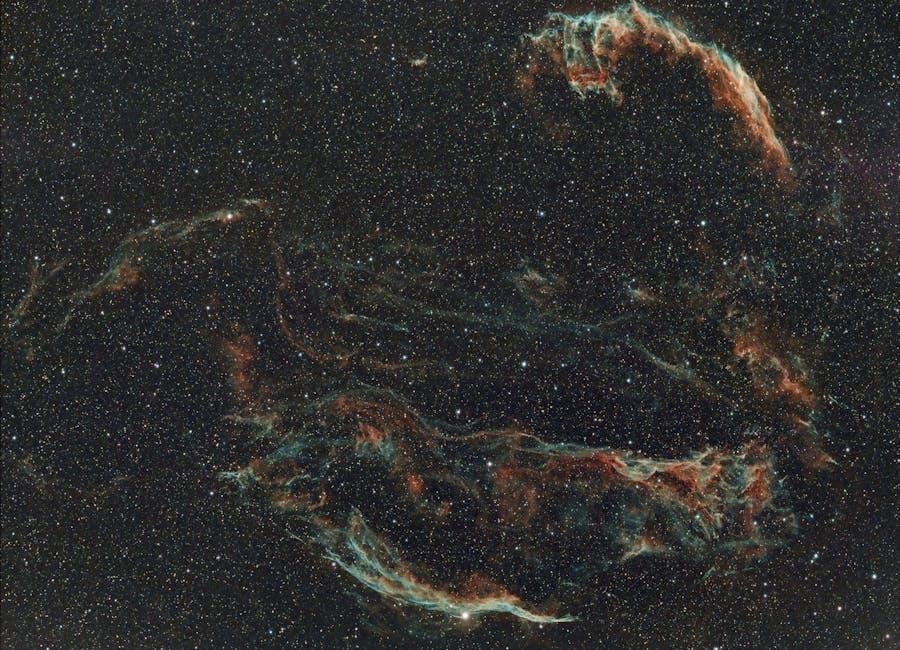
The Guide is more than just a source of information; it’s a companion, a lifeline, and a testament to the power of knowledge in a vast and unpredictable galaxy.
The Guide’s Entries: A Unique Perspective
The Hitchhiker’s Guide entries aren’t merely factual reports; they’re infused with a distinct personality – sardonic, witty, and often surprisingly insightful.
Each entry offers a subjective assessment, blending objective data with humorous anecdotes and cynical observations about the universe and its inhabitants.

The writing style is conversational and engaging, as if a knowledgeable friend is sharing their experiences and opinions, rather than a detached encyclopedia.
Entries frequently include user-submitted contributions, adding to the Guide’s eclectic and often unreliable nature, reflecting the diverse perspectives of galactic travelers.
Planetary descriptions often focus on the mundane aspects of life, like the quality of the local cuisine or the prevalence of bureaucratic red tape.
Species profiles are equally unconventional, highlighting their quirks, foibles, and often questionable motivations.
The Guide doesn’t shy away from controversial topics, offering candid assessments of galactic politics, religion, and philosophy.
Its unique perspective challenges conventional wisdom and encourages readers to question everything they think they know about the universe.
The entries are a testament to the power of storytelling and the importance of seeing the world through different eyes.
Significant Locations
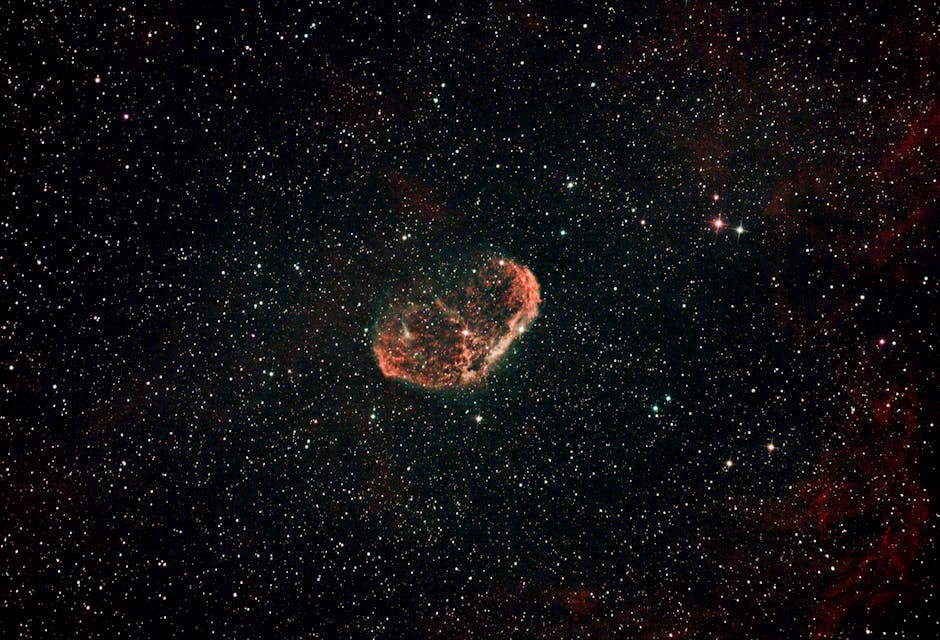
The series traverses a wonderfully bizarre cosmos, featuring Earth’s demolition, the artificial world of Magrathea, and the famously extravagant Restaurant at the End of the Universe.
These locales embody the series’ blend of absurdity and philosophical exploration, offering unique settings for its unforgettable characters and events.
Leave a Reply